
3.1 Introduction
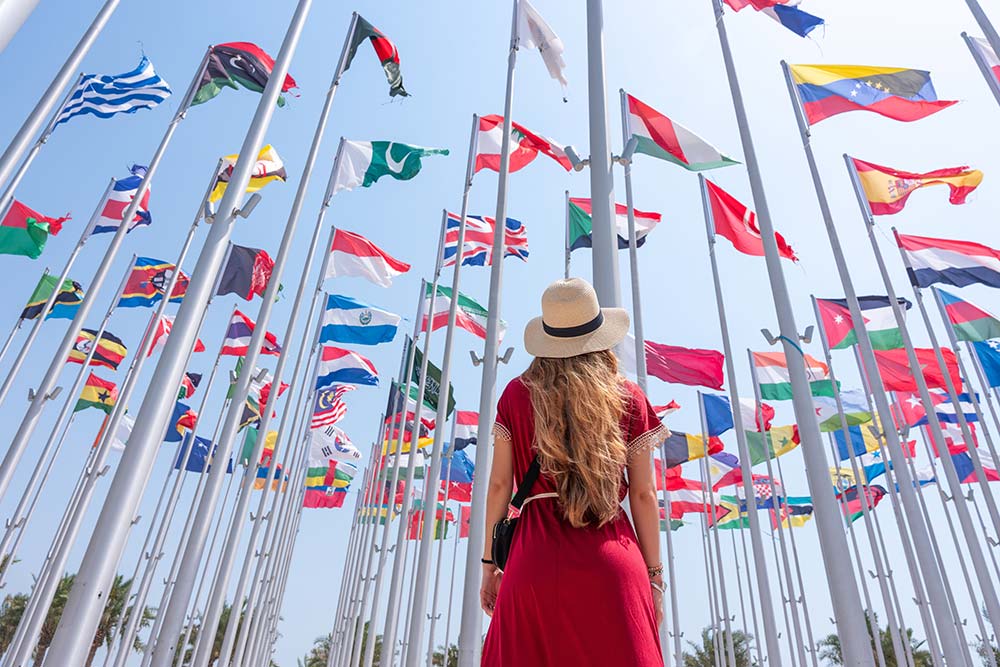
This chapter examines the legal and institutional architecture governing gender equality and the protection of women's human rights in Cameroon. The central argument of this chapter is that while Cameroon has developed a multi-layered legal framework by ratifying key international and regional instruments and enshrining principles of equality in its Constitution, the effective realisation of these rights is significantly hampered. This is due to a combination of legal pluralism, where discriminatory customary and religious laws persist, and a considerable gap between legal provisions and their practical implementation. This chapter will first outline Cameroon's commitments under international and regional law, before analysing the domestic legal and institutional landscape.
3.2 The International Legal Framework
Cameroon's commitment to human rights at the global level is demonstrated by its ratification of several core United Nations (UN) human rights treaties. These instruments create binding obligations on the state to respect, protect, and fulfil the rights contained within them, including the principle of non-discrimination on the basis of sex. The Preamble to the Constitution of Cameroon explicitly affirms the nation's attachment to the principles contained in the Universal Declaration of Human Rights (UDHR) of 1948. Although the UDHR is not a binding treaty, its principles, such as Article 2 which states that everyone is entitled to all rights and freedoms without distinction of any kind, including sex, have gained the status of customary international law and inform Cameroonian jurisprudence.
More significantly, Cameroon has ratified the International Covenant on Civil and Political Rights (ICCPR) and the International Covenant on Economic, Social and Cultural Rights (ICESCR). Both treaties, under their respective Articles 3, oblige state parties to ensure the equal right of men and women to the enjoyment of all rights set forth within them (United Nations, 1966a; 1966b). These covenants provide a broad basis for challenging gender-based discrimination across all spheres of life, from political participation to access to education and healthcare.
The cornerstone of the international legal framework for gender equality is the Convention on the Elimination of All Forms of Discrimination against Women (CEDAW), which Cameroon ratified in 1994. CEDAW provides a comprehensive bill of rights for women and a practical agenda for states to end discrimination. It defines discrimination against women and sets out a framework for national action to end such discrimination in areas including education, employment, healthcare, and political life (UN Women, n.d.). However, Cameroon's implementation of CEDAW has been criticised. The CEDAW Committee has repeatedly expressed concerns regarding the persistence of discriminatory laws in Cameroon, particularly within the Civil Code and in the application of customary law, which contradicts the state's obligations under the Convention (CEDAW Committee, 2014).
3.3 The Regional African Framework
At the regional level, Cameroon is party to the African Charter on Human and Peoples' Rights (the Banjul Charter), which was incorporated into domestic law. Article 2 of the Charter guarantees the enjoyment of the rights and freedoms it recognises without distinction of any kind, such as race, ethnic group, colour, sex, language, religion, or political opinion. Furthermore, Article 18(3) specifically directs state parties to "ensure the elimination of every discrimination against women and also ensure the protection of the rights of the woman and the child as stipulated in international declarations and conventions" (African Union, 1981).
A more specific and progressive instrument is the Protocol to the African Charter on Human and Peoples’ Rights on the Rights of Women in Africa, commonly known as the Maputo Protocol. Cameroon ratified this protocol in 2009. The Maputo Protocol complements the Banjul Charter by providing more extensive and specific rights for women, addressing issues such as violence against women, political participation, inheritance, and reproductive health rights (African Union, 2003). For example, Article 4 explicitly calls on states to prohibit and punish all forms of female genital mutilation. The ratification of the Maputo Protocol represents a significant legal commitment by Cameroon to advance women's rights. Nevertheless, as with the international treaties, a major challenge lies in its domestication and effective implementation, particularly where its provisions conflict with deeply entrenched socio-cultural norms and practices (Fokala, 2016).
3.4 The Domestic Legal Framework
Cameroon's domestic legal system is characterised by pluralism, drawing from the French civil law and English common law traditions, alongside a variety of customary and religious laws. This legal complexity creates significant challenges for the uniform application of gender equality principles.
The primary domestic source of law is the Constitution of the Republic of Cameroon, as amended in 1996. The Preamble is a core component and affirms the equality of all persons in rights and duties, stating that "all persons shall have equal rights and obligations" and it affirms the "protection of minorities and the preservation of the rights of indigenous populations in accordance with the law". This constitutional guarantee of equality and non-discrimination is the fundamental basis for protecting women's rights.
However, below the constitutional level, many statutes contain discriminatory provisions. For instance, the Penal Code, while criminalising acts like rape, has been criticised for its treatment of adultery, which is penalised differently for men and women, often to the disadvantage of women (Jua, 2007). Similarly, family law is an area of significant concern. Aspects of the Civil Ordinance of 1981, which governs marriage, place women in a subordinate position. For example, while the law allows for a choice between monogamous and polygamous marriage, the choice is made by the husband, and a woman married under a polygamous regime has limited legal recourse (Fonchingong, 2006).
Furthermore, the application of customary law, particularly in rural areas and in relation to personal status, inheritance, and land ownership, often overrides statutory protections. Many customary systems are patrilineal and deny women the right to inherit land or property from their fathers or husbands, leaving them economically vulnerable (Ako, 2009). Although the Constitution is supreme, the state has been slow to harmonise these discriminatory customary laws with its constitutional and international obligations, creating a de facto system where women's rights vary significantly depending on their geographical location and ethnic group.
3.5 The Institutional Framework
To implement its commitments to gender equality, Cameroon has established several state institutions. The most prominent is the Ministry of Women's Empowerment and the Family (MINPROFF). Its mandate includes ensuring the implementation of national policy on gender, protecting the family, and taking measures to eliminate discrimination against women. MINPROFF carries out awareness campaigns and provides support services for women, but its effectiveness is often limited by inadequate funding, institutional capacity, and a lack of enforcement powers (Tatah, 2011).
Another key body is the National Commission on Human Rights and Freedoms (NCHRF), established in 1990 and strengthened by a 2004 law. The NCHRF has a broad mandate to promote and protect all human rights, including receiving complaints of violations. While it has addressed issues of gender-based violence and discrimination in its reports, it functions primarily as an advisory body and lacks the power to issue binding decisions or provide effective remedies to victims, being described by some as a "toothless bulldog" (Tantoh & Ngwa, 2018, p. 75). These institutional weaknesses contribute to the persistent gap between the law on the books and the lived realities of women in Cameroon.
3.6 Chapter Conclusion
In summary, Cameroon possesses a formal legal framework that, on paper, supports gender equality and the protection of women's human rights. The state has subscribed to major international and regional treaties and enshrined equality in its Constitution. However, this chapter has shown that this formal commitment is undermined by significant challenges. Discriminatory provisions persist in statutory law, and the powerful influence of patriarchal customary and religious laws creates a system of legal pluralism that perpetuates gender inequality. The state institutions designed to protect and promote women's rights, while important, are often under-resourced and lack the authority to enforce legal provisions effectively. Therefore, a gap remains between de jure protection and de facto reality, a theme that will be explored further in the subsequent analytical chapters of this research.
References
African Union (1981) African Charter on Human and Peoples' Rights (Banjul Charter).
African Union (2003) Protocol to the African Charter on Human and Peoples' Rights on the Rights of Women in Africa (Maputo Protocol).
Ako, R. T. (2009) 'The Land ‘Use’ Act and the puzzle of women’s land rights in Cameroon', Journal of African Law, 53(2), pp. 195-217.
CEDAW Committee (2014) Concluding observations on the combined fourth and fifth periodic reports of Cameroon. CEDAW/C/CMR/CO/4-5.
Fokala, E. (2016) 'The Legal and Human Rights Situation of Women and Children in Cameroon', in E. Fokala and A. A. T. Tiba (eds.) The Right to Development in Africa: A View from the Trenches. Pretoria: Pretoria University Law Press, pp. 249-278.
Fonchingong, C. C. (2006) 'Unbending Gender Narratives in the African Media', Journal of International Women's Studies, 8(1), pp. 135-147.
Jua, N. (2007) 'Gender, state and the “new man” in post-colonial Cameroon', in R. L. Risse, V. H. Langbehn and V. H. Langbehn (eds.) Race and Gender in Modern German Culture. Muenster: LIT Verlag, pp. 219-238.
Tantoh, H. B. and Ngwa, L. N. (2018) 'The Travails of the National Commission on Human Rights and Freedoms in Cameroon', Journal of Human Rights Law and Practice, 1(1), pp. 60-80.
Tatah, L. B. (2011) 'Gender and political participation in Cameroon', The African Anthropologist, 18(1&2), pp. 57-80.
United Nations (1966a) International Covenant on Civil and Political Rights.
United Nations (1966b) International Covenant on Economic, Social and Cultural Rights.
UN Women (n.d.) Convention on the Elimination of All Forms of Discrimination against Women. Available at: https://www.un.org/womenwatch/daw/cedaw/ (Accessed: 15 May 2024).