

This analysis will examine the potential claims in tort law that arise from the series of incidents affecting Leo and Maya. The claims will be addressed by considering the liability of each potential defendant in turn, including Meditech Hospital, the Pharmaceutical Research Team, MediAdvice, Greenacre Farm, QuickRide Ltd, Sam, and the Local Council. The issues cover negligence, occupiers’ liability, vicarious liability, and psychiatric injury.
Claims Arising from Leo’s Initial Surgery
Meditech Hospital and Dr Elena
Leo’s first potential claim is against Meditech Hospital for the injuries sustained during his surgery. This involves two main routes: vicarious liability for the negligence of Dr Elena, and a direct claim against the hospital for its own negligence.
For Dr Elena to be negligent, the standard requirements of duty, breach, and causation must be met. A duty of care between a doctor and patient is well-established in law and does not need detailed examination (Donoghue v Stevenson [1932] AC 562). The main issue is breach. The standard of care for a medical professional is determined by the *Bolam* test, which states a doctor is not in breach if they have acted in accordance with a practice accepted as proper by a responsible body of medical opinion (Bolam v Friern Hospital Management Committee [1957] 1 WLR 582). This test is qualified by *Bolitho v City and Hackney Health Authority* [1998] AC 232, where the court held that the accepted practice must be withstand logical analysis. Here, Dr Elena operated while her abilities were impaired by an experimental drug. No responsible body of medical professionals would agree that operating in such a state is acceptable. Therefore, she has clearly breached her duty of care.
Causation must also be established. Using the ‘but for’ test from *Barnett v Chelsea & Kensington Hospital Management Committee* [1969] 1 QB 428, ‘but for’ Dr Elena’s impairment, the surgical error would not have occurred. The permanent organ damage is also not too remote a consequence of a surgical error, as it is a reasonably foreseeable type of harm (The Wagon Mound (No 1) [1961] AC 388).
As Dr Elena is an employee of Meditech Hospital, the hospital is likely to be vicariously liable for her negligence. For vicarious liability to be established, there must be a relationship of employment or one ‘akin to employment’, and the tort must be sufficiently connected with that employment (Various Claimants v Catholic Child Welfare Society [2012] UKSC 56). Dr Elena is a surgeon employed by the hospital, and the negligent surgery occurred during her work. Therefore, the connection is clear and Meditech would be vicariously liable.
Furthermore, Meditech may have a non-delegable duty of care towards its patients, meaning it cannot avoid liability by delegating tasks to its staff. This principle was confirmed in *Woodland v Swimming Teachers Association* [2013] UKSC 66 and applies to hospitals. The hospital could also be found primarily liable for its own systemic failures, such as allowing staff to work 36-hour shifts and failing to secure experimental drugs.
The Pharmaceutical Research Team
The research team also owed a duty of care to those who might be foreseeably harmed by their product, which includes patients like Leo (Donoghue v Stevenson). By leaving the drugs in an insecure location, they created a foreseeable risk. The facts state they “negligently failed to secure the experimental drugs,” which is a clear breach of their duty. This negligence caused Dr Elena’s impairment, which in turn caused Leo’s injury. The harm to a patient is a foreseeable consequence of an impaired surgeon. The research team is therefore also likely to be liable in negligence to Leo.
Claims Arising Before and During Leo’s Holiday
MediAdvice Platform
Leo used the MediAdvice platform and received incorrect advice that worsened his condition. This raises an issue of negligent misstatement causing personal injury. A duty of care for negligent advice arises where there is a special relationship, an assumption of responsibility by the advisor, and reasonable reliance by the advisee (Hedley Byrne & Co Ltd v Heller & Partners Ltd [1964] AC 465). The platform holds itself out as providing medical recommendations, suggesting a special skill. Leo relied on this, and it was foreseeable that users would do so.
The key problem is the disclaimer. However, the Unfair Contract Terms Act 1977 (UCTA) is relevant here. Section 2(1) of UCTA states that liability for death or personal injury resulting from negligence cannot be excluded or restricted by a contract term or notice. Since the flawed advice led to a worsening of Leo’s physical injury, this section would likely render the disclaimer ineffective. Consequently, MediAdvice (and by extension Meditech, which owns it) is arguably liable for the harm caused by the delay in treatment.
Greenacre Farm
Leo has several potential claims against Ms. Hartley, the owner of Greenacre Farm. First, under the Occupiers’ Liability Act 1957, an occupier owes a lawful visitor a common duty of care to ensure they are reasonably safe for the purposes of their visit (s.2(2)). The website stated the accommodation was suitable for people with mobility issues, but it was not. This is a clear breach of the duty owed to Leo as a visitor, as the premises were not reasonably safe for him.
When Leo entered the barn marked “Private – No Entry,” he became a trespasser. The duty owed to trespassers is covered by the Occupiers’ Liability Act 1984. A duty is owed if the occupier is aware of a danger, knows a trespasser might come into the vicinity of the danger, and the risk is one against which they can reasonably be expected to offer protection (s.1(3)). Ms. Hartley likely knew the poorly secured equipment was a danger and should have foreseen someone might enter the barn. Failing to secure it was likely a breach. The damage to Leo’s mobility aid is recoverable property damage under the 1984 Act.
Finally, Ms. Hartley is likely liable for the injuries caused by her geese under the Animals Act 1971. Section 2(2) imposes strict liability on the keeper of a non-dangerous animal if the damage was of a kind the animal was likely to cause, this likelihood was due to characteristics known to the keeper, and the keeper knew of these characteristics. Ms. Hartley knew her geese were aggressive but did not restrain them. She would be strictly liable for Leo’s injuries.
Claims Arising from the Taxi Accident
QuickRide Ltd and Sam
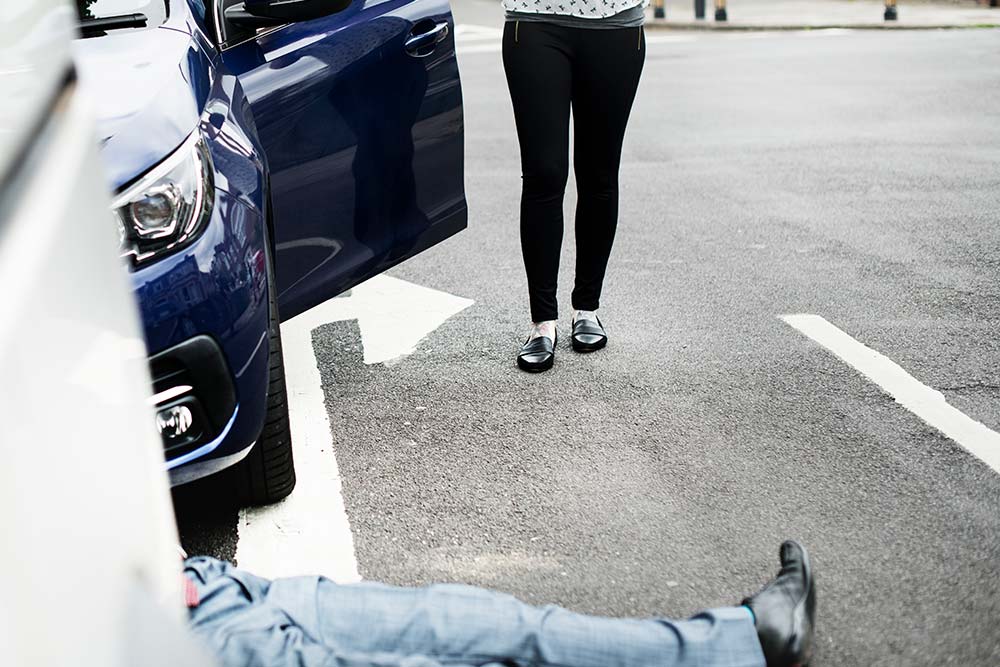
Sam, the taxi driver, owed a duty of care to his passenger, Leo. He breached this duty by driving down a road he was instructed to avoid, which was a decision no reasonable driver would have made in the circumstances (Nettleship v Weston [1971] 2 QB 691). This breach directly caused the accident and Leo’s subsequent injuries.
QuickRide Ltd, as Sam’s employer, would be vicariously liable for his negligence. The tort was committed during the course of his employment. The fact that Sam was acting against his employer’s instructions does not defeat a claim for vicarious liability, as long as the act itself was part of his job (Limpus v London General Omnibus Co (1862) 1 H&C 526).
The Local Council
The council knew about the pothole for weeks but did nothing. Under section 41 of the Highways Act 1980, a highway authority has a statutory duty to maintain the highway. Although public bodies are often protected from common law negligence claims for failing to act (Stovin v Wise [1996] AC 923), this is a specific statutory duty. Section 58 provides a defence if the authority can show it took all reasonable care, but a failure to act for several weeks after gaining knowledge of a hazard makes this defence unlikely to succeed. The council is therefore likely liable for breach of statutory duty.
Maya’s Claim for Psychiatric Injury
Maya witnessed the taxi accident via a live video call and developed severe depression, which is a recognised psychiatric illness. To claim as a secondary victim, she must satisfy the strict control mechanisms set out in *Alcock v Chief Constable of South Yorkshire* [1992] 1 AC 310. These are:
1. A close tie of love and affection with the primary victim (as Leo’s partner, this is presumed).
2. Proximity to the accident in time and space.
3. Perception of the event with her own unaided senses.
The main difficulty for Maya is the third requirement. In *Alcock*, claims from those who saw events on television failed. However, a live, personal video call is arguably different from a public news broadcast. The law is not settled on whether this would satisfy the proximity requirement. Given the courts’ reluctance to extend liability for psychiatric injury, Maya’s claim is uncertain and may fail.
The Damaged Smartwatch
The £40,000 smartwatch belonged to a technology company, not Leo. Leo was a bailee, meaning he had lawful possession of the goods. A bailee is entitled to sue a third party for damage to the goods, holding any damages in trust for the owner (The Winkfield [1902] P 42). Leo can therefore claim for the value of the watch from the parties responsible for the crash: QuickRide (vicariously) and the Local Council.
References
*Alcock v Chief Constable of South Yorkshire* [1992] 1 AC 310.
*Barnett v Chelsea & Kensington Hospital Management Committee* [1969] 1 QB 428.
*Bolam v Friern Hospital Management Committee* [1957] 1 WLR 582.
*Bolitho v City and Hackney Health Authority* [1998] AC 232.
*Donoghue v Stevenson* [1932] AC 562.
*Hedley Byrne & Co Ltd v Heller & Partners Ltd* [1964] AC 465.
*Limpus v London General Omnibus Co* (1862) 1 H&C 526.
*Nettleship v Weston* [1971] 2 QB 691.
*Overseas Tankship (UK) Ltd v Morts Dock & Engineering Co Ltd (The Wagon Mound) (No 1)* [1961] AC 388.
*Stovin v Wise* [1996] AC 923.
*The Winkfield* [1902] P 42.
*Various Claimants v Catholic Child Welfare Society* [2012] UKSC 56.
*Woodland v Swimming Teachers Association* [2013] UKSC 66.
Animals Act 1971.
Highways Act 1980.
Occupiers’ Liability Act 1957.
Occupiers’ Liability Act 1984.
Unfair Contract Terms Act 1977.