

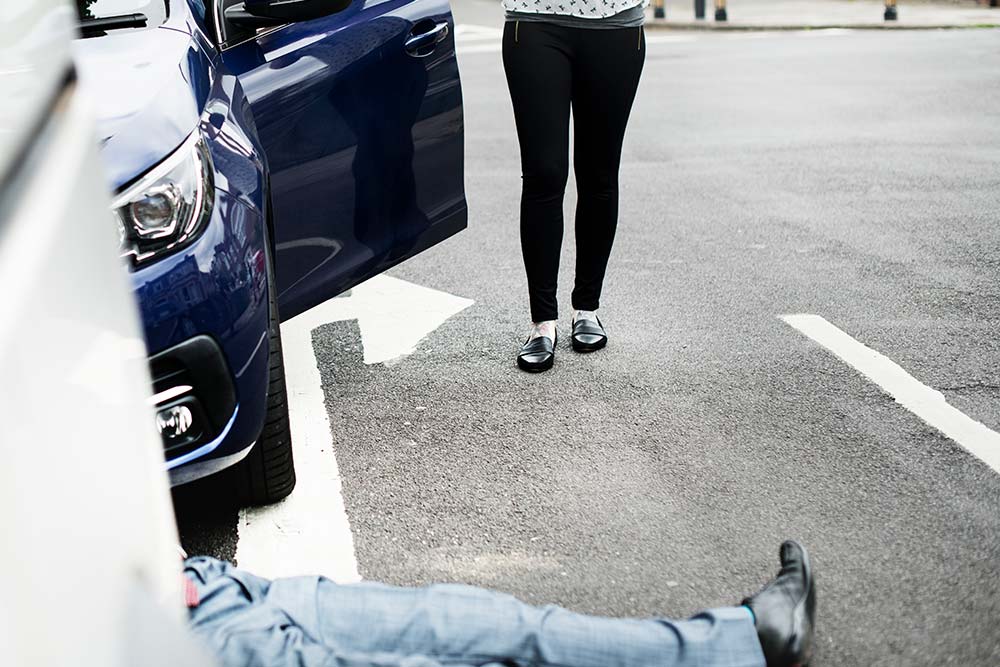
The tort of negligence is a significant area of civil law that allows a person who has suffered harm to claim compensation from the person who caused it. Unlike many other torts, negligence does not require the defendant to have intended to cause harm. Instead, it is concerned with careless conduct that falls below a certain standard. For a claimant to succeed in a negligence claim, they must establish three key elements on the balance of probabilities: that the defendant owed them a duty of care, that the defendant breached that duty, and that the breach caused them to suffer legally recognised damage. This essay will explain these core components of a negligence claim, using important cases to illustrate how the law has developed and is applied.
The Duty of Care
The first hurdle for any claimant in negligence is to establish that the defendant owed them a duty of care. For many years, there was no single principle to determine when such a duty would arise. The foundational modern test was established in the landmark case of Donoghue v Stevenson [1932] AC 562. In his judgment, Lord Atkin formulated the ‘neighbour principle’, stating that "You must take reasonable care to avoid acts or omissions which you can reasonably foresee would be likely to injure your neighbour." A neighbour was defined as someone "so closely and directly affected by my act that I ought reasonably to have them in contemplation as being so affected" when carrying out the act in question. This principle created a general basis for liability in negligence.
However, the courts later became concerned that the neighbour principle was too wide, potentially opening the door to a flood of claims. The current test for establishing a duty of care in novel situations comes from Caparo Industries plc v Dickman [1990] 2 AC 605. This case established a three-stage test. A court must ask:
- Was the harm reasonably foreseeable?
- Was there a relationship of proximity between the claimant and defendant?
- Is it fair, just and reasonable to impose a duty of care?
Foreseeability requires that a reasonable person in the defendant’s position would have foreseen the risk of harm to the claimant or a class of people to which they belong. For instance, in Kent v Griffiths [2001] QB 36, it was held to be foreseeable that a patient could suffer further illness if an ambulance failed to arrive promptly. Proximity refers to a legal closeness between the parties, which can be based on factors like time, space, or a particular relationship. Finally, the "fair, just and reasonable" element allows the courts to consider public policy and prevent the imposition of liability in situations where it might be inappropriate, for example, in relation to emergency services or other public bodies making certain operational decisions.
Breach of Duty
Once a duty of care is established, the claimant must then prove that the defendant breached it. This means showing that the defendant’s conduct fell below the required standard of care. The standard is objective, famously described in Blyth v Birmingham Waterworks Co (1856) 11 Ex 781 as that of the "reasonable man." The question is not what the particular defendant could have done, but what a reasonable person would have done in the same circumstances.
This standard can be adjusted depending on the characteristics of the defendant. For example, a person holding themselves out as having a particular skill, like a doctor, will be judged by the standard of a reasonably competent person in that profession (Bolam v Friern Hospital Management Committee [1957] 1 WLR 582). In contrast, a lower standard is generally applied to children. The courts also weigh up several factors to determine what is reasonable, including the likelihood of the harm occurring (Bolton v Stone [1951] AC 850, where the risk of a cricket ball hitting someone outside the ground was very low) and the potential seriousness of the harm (Paris v Stepney Borough Council [1951] AC 367, where the court held that greater care should have been taken for a one-eyed worker).
Causation of Damage
The final element is causation. The claimant must prove that the defendant’s breach caused their damage. This involves two aspects: factual causation and legal causation (or remoteness). Factual causation is usually determined by the 'but for' test: would the harm have occurred 'but for' the defendant’s breach of duty? In Barnett v Chelsea & Kensington Hospital Management Committee [1969] 1 QB 428, a man died of arsenic poisoning after a hospital doctor negligently sent him home. However, the claim failed because evidence showed he would have died anyway, even if he had been treated correctly. Therefore, the doctor’s negligence was not the factual cause of death.
Legal causation deals with remoteness. The law does not hold a defendant liable for all consequences of their breach, no matter how unforeseeable. The modern test for remoteness was established in The Wagon Mound (No 1) [1961] AC 388, which decided that a defendant is only liable for damage that is of a reasonably foreseeable type. If the kind of damage suffered by the claimant was not foreseeable, the claim will fail on the grounds of remoteness.
In conclusion, the tort of negligence is structured around the three essential pillars of duty, breach, and causation. The principles developed through landmark cases such as Donoghue v Stevenson and Caparo v Dickman provide a framework for determining whether one person's carelessness should result in a legal liability to compensate another. A claimant must successfully argue each element in turn to establish a claim.
References
Barnett v Chelsea & Kensington Hospital Management Committee [1969] 1 QB 428
Blyth v Birmingham Waterworks Co (1856) 11 Ex 781
Bolam v Friern Hospital Management Committee [1957] 1 WLR 582
Bolton v Stone [1951] AC 850
Caparo Industries plc v Dickman [1990] 2 AC 605
Donoghue v Stevenson [1932] AC 562
Kent v Griffiths [2001] QB 36
Paris v Stepney Borough Council [1951] AC 367
The Wagon Mound (No 1) [1961] AC 388